
How Banks Can Support Stablecoins and The GENIUS ACT

Stablecoins have moved from theory to policy discussion. Hearings before the Senate Banking Committee, analysis from the Brookings Institution, and legislative proposals like the GENIUS Act and the Clarity for Payment Stablecoins Act signal that digital assets are now core to the mainstream financial dialogue.
For most institutions, the interest is pragmatic: faster settlement, programmable logic, and streamlined infrastructure. However, these assets introduce a structural tension. If regulatory frameworks or margin pressures prevent banks from offering traditional interest-bearing digital assets, they face a looming competitive crisis.
One question sits at the center of this shift: If banks cannot compete on yield, what becomes the new currency of customer loyalty?
The Bank Deposits Reality
Banks depend on bank deposits to support local lending, auto loans, and business credit. Retail deposits provide the funding base that enables financial intermediation and keeps credit flowing through local economies.
When new instruments such as interest-paying stablecoins enter the picture, regulators begin to ask whether they could drain deposits from the traditional banking system. During periods of market stress, even small shifts in assets can affect lending capacity.
This is why policymakers and the Federal Reserve are examining the broader implications of stablecoin risk. Stablecoin issuers offering yield-like incentives could unintentionally compete with retail deposits, altering how money flows through the system.
Banks exploring stablecoins are therefore navigating two realities:
- Customers expect innovation and access.
- Regulators prioritize financial stability and deposit protection.
That tension limits how monetary rewards can be structured.
Why Monetary Rewards Are Complicated
Historically, banks have used a range of incentives to encourage customer loyalty:
- Competitive interest rates
- Transactional rewards tied to a debit card
- Cash bonuses for direct deposit
- Points programs linked to purchases
In today’s environment, layering yield-like features onto digital tokens can resemble interest compensation on deposits. That increases regulatory scrutiny, especially as the banking industry debates the impact of stablecoins on funding structures.
If stablecoins begin to look like money market mutual funds or deposit substitutes, the conversation shifts quickly to systemic risk and oversight. Industry groups such as the Blockchain Association have emphasized consumer choice and innovation, while regulators focus on guardrails and stability.
For banks, the practical takeaway is simple: monetary incentives are increasingly sensitive.
The Yield Bypass: Why the Old Playbook is Obsolete
To understand why banks need new reward strategies, we must first look at how payment stablecoins leak value out of the traditional banking ecosystem. In a standard retail banking model, money stays within a circular economy: the bank takes a deposit, lends it out, and shares a portion of the interest (the yield) with the depositor.
Payment stablecoins create a linear bypass. Here is how the flow shifts:
- The Exit Point: When a customer moves $1,000 from a checking account into a payment stablecoin, that liquidity often leaves the commercial bank’s balance sheet.
- The Reserve Capture: Per regulatory requirements (like those in the GENIUS Act), the stablecoin issuer must back that $1,000 with high-quality liquid assets—typically U.S. Treasuries or Reverse Repos.
- The Yield Lock: The interest generated by those Treasuries goes to the issuer to cover operational costs and profit. However, current U.S. policy explicitly prohibits the issuer from passing that yield back to the end-user.
The Competitive Crisis
This creates a "yield vacuum." If the assets backing the stablecoin are earning 4–5% in the Treasury market, but the law prevents that value from reaching the customer, the customer is effectively paying an "opportunity tax" to use the digital asset.
For banks, the challenge is no longer about winning a "rate war." It is about filling that value gap with something other than a percentage sign. If you cannot pay them in basis points ($bps$), you must pay them in utility, speed, or ecosystem access.
What Do Customers Still Expect?
Regardless of complexity and uncertainty, customers still expect and demand value from their banking partners. Business owners, consumers, and credit union members evaluate their financial institution on:
- Ease of access
- Transparent fees
- Useful financial products
- Continued engagement
- Relevant benefits
A customer does not measure loyalty solely in basis points. Many customers feel loyalty when a bank helps them operate more efficiently, reduce expenses, or gain early access to useful services.
In small business banking, this becomes even more pronounced. A discount on software, advisory support, or operational tools can matter more than incremental interest on a deposit account. In the past, offering such perks would have been impossible or too costly for many banks, especially the smaller community banks, to even consider offering any other form of reward. But with the new laws and innovations come new opportunities for those willing to embrace them.
A new space that facilitates non-monetary rewards for bank customers is emerging, and the best part is that it doesn't interfere with deposit funding or financial intermediation.

Rethinking Rewards in a Regulated Market
As the GENIUS Act and the Clarity for Payment Stablecoins Act redefine the treatment of digital liabilities, banks must decouple "value" from "yield."
Instead of a yield-based model that mimics a security, banks can pivot to utility-based incentives that lower the cost of doing business.
For SMEs and regional businesses, the bank becomes more than a vault; it becomes a procurement ally. Key non-yield rewards include:
- SME Vendor Discounts: Pre-negotiated "Preferred Partner" pricing on the essential tools businesses already use, such as cloud hosting (AWS/Azure), accounting software (QuickBooks/Xero), or CRM platforms.
- Operational Fee Reductions: Automated offsets for high-frequency costs, such as wire fees, ACH batch processing, or "gas" fees for on-chain transactions.
- Preferred Access to Liquidity Tools: Fast-track underwriting or discounted origination fees for lines of credit, tied to the stability of the customer’s stablecoin transaction volume.
- Curated B2B Partnerships: Instant, programmable rebates when customers use stablecoins to pay other vendors within the bank’s own commercial network.
Strengthening the Core
These rewards do not compete with retail deposits because they are service-linked rather than balance-paid. They do not resemble interest payments, which keeps the bank clear of the regulatory hurdles associated with investment contracts.
Most importantly, they do not shift assets away from core funding or introduce the volatility of speculative digital assets. Instead, they strengthen customer retention by embedding the bank deeper into the customer’s daily operations.
For community and regional institutions, this isn't just a tech play; it’s a return to form. It aligns perfectly with their mission to support local economic growth by lowering the barrier to entry for modern business tools.
The next question becomes practical: how do you organize and deliver these benefits in a way that is visible, scalable, and easy for customers to access?
Offering isolated discounts or one-off perks rarely changes behavior. To have a real impact, non-monetary rewards need structure. They need a place to live, a way to be curated, and a clear connection to the bank’s relationship with its customers.
A marketplace model becomes the next logical step.
Curious what a structured non-monetary rewards marketplace looks like in practice? Take a look at how Proven helps banks deliver value beyond yield.
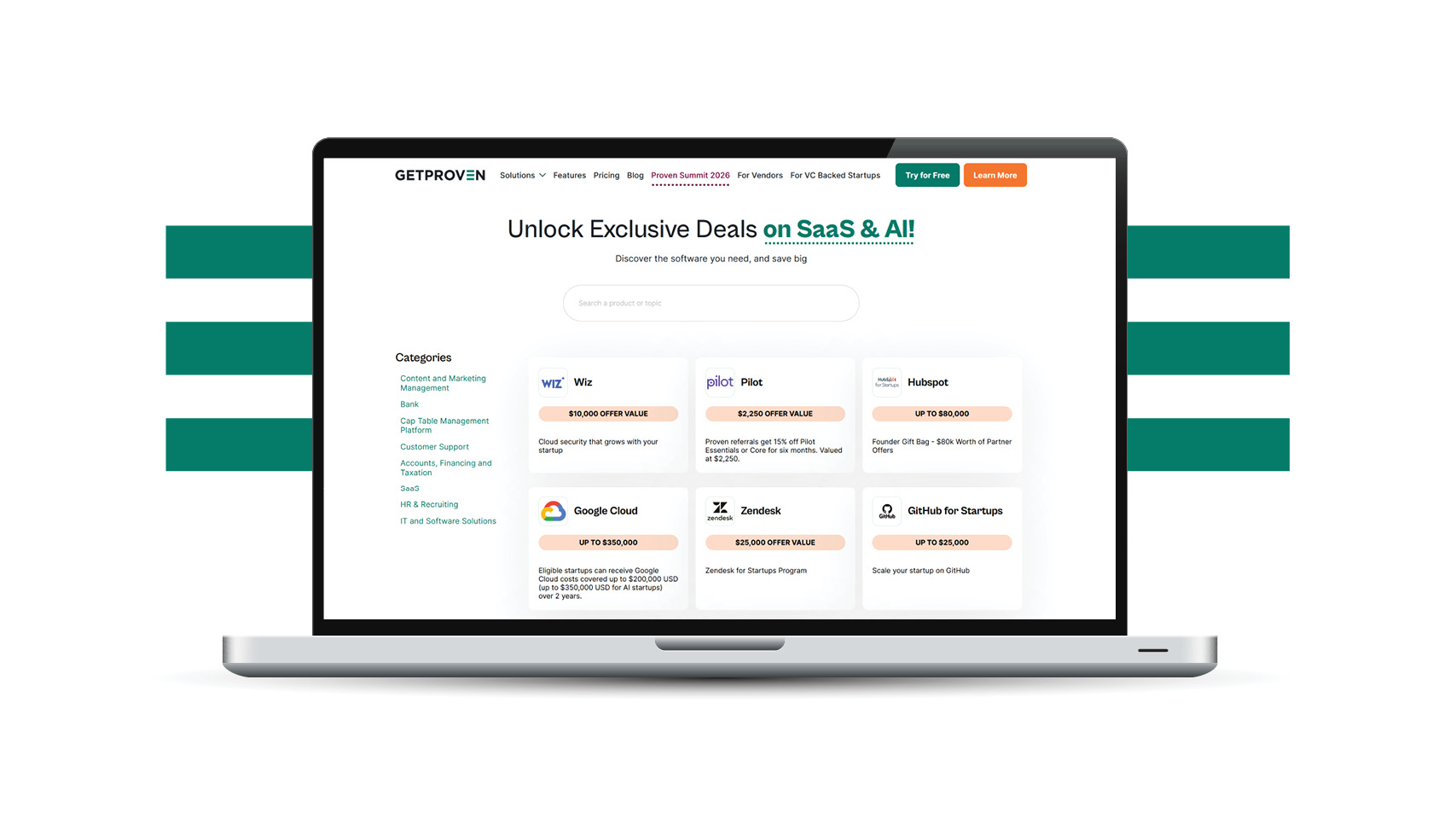
The Role of Marketplaces When Incorporating Non-Monetary Rewards for Bank Customers
When non-monetary rewards are scattered or informal, they rarely influence long-term behavior. A few isolated discounts or limited-time offers do not meaningfully shape how customers evaluate their bank. For benefits to strengthen customer retention, they need structure, visibility, and ongoing relevance.
A curated marketplace creates that foundation.
Rather than introducing another financial product or modifying interest mechanics, a marketplace provides institutions with a clear way to give customers organized access to practical value.
Trusted vendors, negotiated discounts, and operational tools can be brought together in one place, making it easier for customers to understand and use the benefits available to them. See example here.
For small businesses, the effect can be immediate. Reduced software costs, preferred service providers, or negotiated vendor terms can translate into measurable savings that directly support margins and cash flow. These kinds of advantages often matter more than transactional rewards tied to purchases or short-term incentive programs.
A structured marketplace also clarifies the bank’s role. Instead of competing on rate or abstract loyalty schemes, the institution becomes a gateway to vetted services and dependable partners. That positioning is practical. It reinforces credibility by aligning the bank with tools and providers customers already trust and use.
In competitive markets where multiple brands compete for attention, differentiation rarely comes from incremental rewards alone. It comes from consistent usefulness. When benefits are relevant and easy to access, customers are more likely to remain loyal because the relationship delivers ongoing value rather than occasional incentives.
Over time, this approach contributes to satisfied customers who associate their financial institution with reliability, access, and everyday support.
If Customer Retention Is Still a Priority in 2026
For community banks and credit unions, customer retention has always mattered. But in 2026, it requires a different kind of attention.
Customers now compare their bank not only to other financial institutions, but to every service they use online. Expectations are shaped by convenience, transparency, and access. When customers evaluate where to keep their accounts, they consider more than interest rates. They consider whether the relationship feels useful.
If retention remains a strategic priority, then value must extend beyond the account itself.
Community institutions are uniquely positioned here. They already understand local markets, small businesses, and member needs. The opportunity is to make that understanding visible and practical.
Structured, non-monetary rewards give customers a clear reason to stay engaged without relying on short-term financial incentives.
This approach strengthens the relationship in ways that compound over time. Customers who see tangible support tied to their daily operations are more likely to stick with your bank because it consistently contributes to their success.
For institutions that care about long-term retention, the question to ask now is how to remain relevant in the everyday decisions their customers make.
A Practical Path Forward
As digital asset policy continues to evolve, many institutions are watching developments around the pending CLARITY ACT and broader market structure changes.
Some banks are already involved. Others are evaluating how stablecoin issuers and new payment rails might affect their funding, engagement, and competitive positioning.
What remains clear is this: customer expectations are moving faster than regulation.
Banks exploring stablecoins are often doing so to increase engagement, modernize infrastructure, or attract digitally native customers. But monetary incentives tied to yield or interest introduce complexity, oversight, and potential funding sensitivity.
Non-monetary rewards operate in a different lane.
They allow institutions to deliver visible value without altering deposit structures, compensation models, or lending strategy. They complement digital innovation rather than complicate it. And they give customers practical benefits that improve day-to-day operations.
For banks that are already offering stablecoins or are seriously considering it, this creates an opportunity. Rather than seeking to provide customers with other financial products which they may or may not find utility value in, it might be worth testing this as a new initiative.
If your most engaged customers express desire in receiving a new level of support that ties more directly into their daily operations, then your bank could be well on the way to a more stable future with deeper relationships amongst your client base.
Proven is designed to offer this new level of support for banking institutions operating in stablecoin environments. It provides:
- A compliant way to deliver non-monetary rewards to clients
- Structured vendor partnerships that strengthen engagement
- A visible value layer that supports retention without relying on interest-based incentives
If your bank is exploring or launching stablecoins, ask us about Proven’s stablecoin-ready marketplace package.


Browse more topics from this article
Heading 1
Heading 2
Heading 3
Heading 4
Heading 5
Heading 6
Lorem ipsum dolor sit amet, consectetur adipiscing elit, sed do eiusmod tempor incididunt ut labore et dolore magna aliqua. Ut enim ad minim veniam, quis nostrud exercitation ullamco laboris nisi ut aliquip ex ea commodo consequat. Duis aute irure dolor in reprehenderit in voluptate velit esse cillum dolore eu fugiat nulla pariatur.
Block quote
Ordered list
- Item 1
- Item 2
- Item 3
Unordered list
- Item A
- Item B
- Item C
Bold text
Emphasis
Superscript
Subscript
Heading 1
Heading 2
Heading 3
Heading 4
Heading 5
Heading 6
Lorem ipsum dolor sit amet, consectetur adipiscing elit, sed do eiusmod tempor incididunt ut labore et dolore magna aliqua. Ut enim ad minim veniam, quis nostrud exercitation ullamco laboris nisi ut aliquip ex ea commodo consequat. Duis aute irure dolor in reprehenderit in voluptate velit esse cillum dolore eu fugiat nulla pariatur.
Block quote
Ordered list
- Item 1
- Item 2
- Item 3
Unordered list
- Item A
- Item B
- Item C
Bold text
Emphasis
Superscript
Subscript
Heading 1
Heading 2
Heading 3
Heading 4
Heading 5
Heading 6
Lorem ipsum dolor sit amet, consectetur adipiscing elit, sed do eiusmod tempor incididunt ut labore et dolore magna aliqua. Ut enim ad minim veniam, quis nostrud exercitation ullamco laboris nisi ut aliquip ex ea commodo consequat. Duis aute irure dolor in reprehenderit in voluptate velit esse cillum dolore eu fugiat nulla pariatur.
Block quote
Ordered list
- Item 1
- Item 2
- Item 3
Unordered list
- Item A
- Item B
- Item C
Bold text
Emphasis
Superscript
Subscript
Heading 1
Heading 2
Heading 3
Heading 4
Heading 5
Heading 6
Lorem ipsum dolor sit amet, consectetur adipiscing elit, sed do eiusmod tempor incididunt ut labore et dolore magna aliqua. Ut enim ad minim veniam, quis nostrud exercitation ullamco laboris nisi ut aliquip ex ea commodo consequat. Duis aute irure dolor in reprehenderit in voluptate velit esse cillum dolore eu fugiat nulla pariatur.
Block quote
Ordered list
- Item 1
- Item 2
- Item 3
Unordered list
- Item A
- Item B
- Item C
Bold text
Emphasis
Superscript
Subscript
Heading 1
Heading 2
Heading 3
Heading 4
Heading 5
Heading 6
Lorem ipsum dolor sit amet, consectetur adipiscing elit, sed do eiusmod tempor incididunt ut labore et dolore magna aliqua. Ut enim ad minim veniam, quis nostrud exercitation ullamco laboris nisi ut aliquip ex ea commodo consequat. Duis aute irure dolor in reprehenderit in voluptate velit esse cillum dolore eu fugiat nulla pariatur.
Block quote
Ordered list
- Item 1
- Item 2
- Item 3
Unordered list
- Item A
- Item B
- Item C
Bold text
Emphasis
Superscript
Subscript






.png)


